
 Sermon Central
-
Rest For The Restless
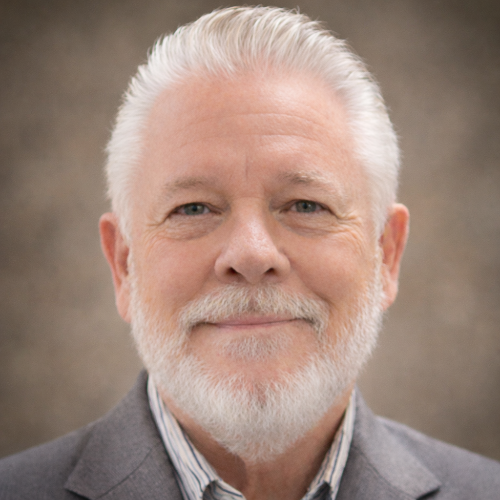
Contributed by David Dunn on Feb 7, 2026 (message contributor)
Summary: God invites weary hearts to leave the world’s restless search for the new and return to Christ, the old path of rest.
We live in an age enamored by the new.
New technology.
New methods.
New philosophies.
New spiritual voices.
New versions of truth.
Everything must be updated, rebranded, optimized, improved. If something is old, we tend to assume it must be outdated. If something is new, we assume it must be better.
We even have small rituals of renewal in our culture.
Every year, the new Apple phone is released. And people line up for it the way pilgrims once lined up at holy sites. The promise is always the same: this one is better. This one is faster. This one changes everything.
And for a few days, it feels like a kind of technological conversion. A small, modern, born-again experience in your pocket.
The old phone suddenly feels embarrassing.
Outdated.
Slow.
Unworthy of being seen in public.
But within a year, the new phone becomes the old phone.
And the cycle begins again.
Because in our world, new always promises more than it can deliver.
And the strange thing is this: the more new things we gain, the more tired we seem to become.
We have more tools than any generation in history—yet less peace.
More choices—yet more confusion.
More convenience—yet more anxiety.
More entertainment—yet more emptiness.
The soul does not update like software.
The heart does not find rest through upgrades.
And the deepest problems of the human condition have never been solved by novelty.
We are now entering what many people call the age of artificial intelligence. Machines can write, speak, diagnose, compose, and analyze faster than we can. Tasks that once took hours now take seconds. Problems that once required years of training can now be solved with a few keystrokes.
And you would think that with all this new power, all this new efficiency, human beings would finally be at rest.
But we are not.
We are more connected, but less at peace.
More informed, but less certain.
More efficient, but more exhausted.
More entertained, but more empty.
We have built machines that can think faster than we can.
But we have not found a way to quiet the human heart.
Even the great religious traditions of the world are facing this question of what comes next.
The Dalai Lama, the spiritual leader of Tibetan Buddhism, is now an old man. And one of the great questions in the world today is this: Who will replace him?
Traditionally, when a Dalai Lama dies, monks search for a child believed to be his reincarnation. They look for signs, visions, and recognition of sacred objects. It is a process that has gone on for centuries.
But this time, everything is uncertain.
The Dalai Lama himself has said he might not be reincarnated at all.
He might choose a successor before he dies.
He might be reborn outside Tibet.
Meanwhile, the Chinese government insists they will appoint the next Dalai Lama themselves.
So the world is watching, and many expect that when he dies, there may be two Dalai Lamas—one chosen by the monks, and one appointed by the state.
Millions of people are waiting for a new spiritual leader, and no one knows who he will be, where he will come from, or whether the world will even agree on him.
And when I think about that, it feels strangely close to home.
My father once worked in Kalimpong, in the Himalayan region. And during that time, he actually met the Dalai Lama. It wasn’t a grand, ceremonial moment. It was simply one human being meeting another.
But to the people around him, this was not just a man. This was a spiritual figure—someone carrying centuries of expectation, tradition, and hope.
And now, decades later, the world is asking again:
Who will come next?
Who will carry the authority?
Who will guide the people?
And in the middle of a world that is constantly waiting for the next voice, the next leader, the next system, the next answer—God says something very different.
He does not say,
“Wait for the new path.”
He does not say,
“I will reveal a better way later.”
He says:
“Stand in the ways and see,
And ask for the old paths, where the good way is,
And walk in it;
Then you will find rest for your souls.”
—Jeremiah 6:16
---000--- Part 1:
A People Who Were Tired but Would Not Return
*****
Jeremiah spoke these words to a nation that was outwardly religious, but inwardly restless.
They had the temple.
They had the sacrifices.
They had the songs.
They had the ceremonies.
They had the language of faith.
But they did not have rest.
Their lives were full of activity, but empty of peace. Their religion was still in place, but their hearts were far from God.
Instead of returning to Him, they began looking for new solutions.


