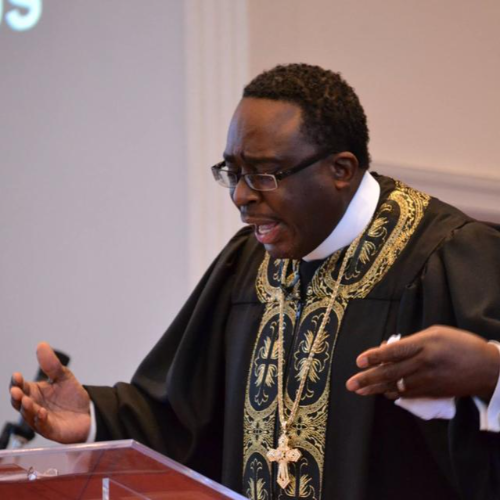
What Black History Means to Me
Theme Scripture:
Psalm 44:1 – “We have heard with our ears, O God, our fathers have told us, what work thou didst in their days, in the times of old.”
As Christians, we have much to consider, learn from, and celebrate during Black History Month. When President Gerald Ford officially recognized Black History Month in 1976, he called us to “seize the opportunity to honor the too-often neglected accomplishments of black Americans.” Black History Month gives Christians a great opportunity to go well beyond just honoring accomplishments. We can examine our human pride, pursue reconciliation and forgiveness, and grow in celebrating God’s good gift of diversity.
Here are three points for this morning sermon that express some of my inner thoughts of Black History. #IbeenThinking
#1 - We recognize the image of God in every person.
So God created mankind in his own image, in the image of God he created them; male and female he created them. - Genesis 1:27
Black History Month is an important time to reflect on the struggles, sacrifices, and accomplishments of African Americans throughout our nation’s history. It is also an important opportunity to recognize the image of God in each and every person, regardless of their background or ethnicity. As Christians, we are called to love our neighbors and treat them with respect, as they were all created in the image of God, and therefore, are all equal in his eyes. We can use this time to examine how we may have contributed to racism and injustice in the past, and how we can work to make our society more equitable and just moving forward.
# 2- We embrace the power of forgiveness.
Forgive us the wrongs we have done, as we forgive the wrongs that others have done to us. Matthew 6:12 (GNT)
The power of forgiveness is key to our faith, and it is especially important to remember during Black History Month. We must forgive those who have wronged us, and ask for forgiveness from those we have wronged. The only way to move forward in a spirit of love and understanding is to work on healing the wounds of our past.
#3 - We celebrate our differences
There before me was a great multitude that no one could count, from every nation, tribe, people and language, standing before the throne and before the Lamb. - Revelation 7:9
Black History Month is not just about recognizing our past, but also about celebrating our differences—differences that will make us a beautiful tapestry when we all stand before Jesus at the end of this age. We can use this time to celebrate the contributions African Americans have made to our society, and to appreciate the beauty and diversity of all cultures. By celebrating our differences, we can create a more inclusive, equitable, and just society for everyone.
What Black History means to me, Is to look back at the impact our Black civil rights leaders and leaders of the Black community have had on our community, organizations and cities. It means celebrating and honoring the legacy these leaders have laid for future generations to follow. It means supporting the advancement of the Black community amidst the racial injustices that continue to happen throughout the U.S. today. It means educating myself further and honoring the fact that we would not be where we are today without the innovative contributions these Black leaders and pioneers have made — and to remind myself daily that Black history cannot be contained to a single month but should celebrated year-round.
For many, Black History is a reminder of everything our ancestors endured and overcame. It is not just a 28-day marathon of reflection, pride and patriotism but it is a lifetime of reflection, pride of being Black in America. It is a declaration of the strength of African American people. And while I am honored by the leaders whose ideologies we reflect upon; I find it hurtful and damaging that we are still too scared to address our scars and how they affect our mental health.
Given that African Americans were enslaved and brought to the U.S. by their oppressors and American colonists, is there not a need to further explore the devastations that African Americans have faced? How do we as a nation digest the fact that those once seen as 3/5 of a person, or even as property, are still in need of healing? How do we address the current oppression, discrimination and wrongful killing of Black people to this day?
We are perceived as strong for we are tenacious, but strength and resilience should not be built solely through suffering.
I have watched many idolize people like George Floyd as if they were martyrs. But they were not martyrs, they were victims who did not have a choice of life or death or even liberty or death. I am sure if you asked their families, they would much rather the continued existence of their loved ones than the admiration that only came after bullet wounds, suffocation, lynching or other hate-filled acts of murder.
As an African American/Black man, I would like to be respected for my strength and tenacity in moving forward and progressing in a way that I choose. And my choice has been to develop a wellness recovery action plan that allows me to champion and advocate for mental health reform. I don’t want to be admired for suffering in silence and being resilient after prejudices that should be illegal — I want to be admired for speaking out about mental health.
My feeling of Black History Month is that Black history should not just be recognised for just one month but black history is a movement that needs to be acknowledged everyday. I urge Black Americans to see the need for a mental health movement that breaks through for the African American community which is more important now than ever. We have built upon the legacies of others due to our contributions to science, technology, agriculture, and medicine and now it is time to rebuild our own state of well-being.
It is time for America to address our need for healing, not in a self-serving manner that allows delegates and racist parties to rid themselves of guilt while neglecting any accountability, but in a way that allows those reforming current policies to actively engage and understand the current state of the African American population with a focus on equity.
For me, it’s helpful to remember the life of Chadwick Boseman, who in real life was stronger than the character he portrayed. Chadwick Boseman reminded me of the power of our voice and its amplification when followed by our actions. His passion and persistence even while in severe pain from cancer reminds me that we as a people need to take action to enrich our lives, and the lives of those who are to come after us, through prioritizing our mental health. Not only in tragedy, but in triumph.
"Black communities across the globe continue to be vulnerable in very unique and unsettling ways," Redmond says. "To sing this song is to revive that past — but also to recognize, as the lyrics of the song reveal, that there is a hopeful future that might come of it."
"Lift Every Voice and Sing" was first performed in 1900, at a segregated school in Jacksonville, Fla., by a group of 500 children celebrating the anniversary of the birth of President Lincoln. The first verse opens with a command to optimism, praise and freedom:
Lift every voice and sing, Till earth and Heaven ring, Ring with the harmonies of liberty
The second verse reminds us to never forget the suffering and obstacles of the past:
Stony the road we trod, Bitter the chastening rod, Felt in the days when hope unborn had died
The third and final stanza is about the challenges of the future. They are to be met with perseverance, courage, faith, and trust in God:
Thou who hast by Thy might, Led us into the light, Keep us forever in the path, we pray
"Lift Every Voice and Sing" was written at a pivotal time, when Jim Crow was replacing slavery and African-Americans were searching for an identity. Author and activist James Weldon Johnson wrote the words as a poem, which his brother John then set to music. Two key events led to its being named the Negro National Anthem: In 1905, Booker T. Washington endorsed it, and in 1919, it became the official song of the NAACP.
"It spoke to the history of the dark journey of African-Americans," says current NAACP president Derrick Johnson, "and for that matter many Africans in the diaspora [who] struggled through to get to a place of hope."
The song became a rallying cry for black communities, especially in the South. But its influence reached well beyond those boundaries, according to Timothy Askew, an English professor at Clark Atlanta University and scholar of the song's history.
"Even during days of segregation, "there were Southern white churches ... who wrote to James Weldon Johnson and who said, 'We are singing that song you called the black national anthem.' People in Japan, South America, people around the world, particularly during the '30s and '40s, were singing this song."
"Lift Every Voice and Sing" faded from popularity towards the end of the civil rights movement in favor of songs like "We Shall Overcome." The song's recognition as a black national anthem is actually one of the reasons it has moved in and out of favor.
"There were many African-Americans who were in conflict with that idea," Askew says. "They were saying, 'Well, if we have marched, and we have attained what we hope to be equality, we can't have a black anthem. We need an anthem that links us all together."
On the other hand, the song that theoretically should link all Americans together, "The Star Spangled Banner," falls short of that goal according to Shana Redmond.
"The National Anthem, 'The Star Spangled Banner,' was missing something — was missing a radical history of inclusion, was missing an investment in radical visions of the future of equality, of parity," she says. "'Lift Every Voice and Sing' became a counterpoint to those types of absences and elisions."
The song is now widely performed — at churches, schools, and graduation ceremonies and beyond. The Morgan State University Choir opens every concert with it. It's included in nearly 30 different Christian hymnals, both black and white.
In 2009, the entire nation heard its words when Civil Rights leader Rev. Joseph Lowery gave the benediction at President Barack Obama's first inauguration, and began by quoting the song's third verse nearly verbatim.
"It allows us to acknowledge all of the brutalities and inhumanities and dispossession that came with enslavement, that came with Jim Crow, that comes still today with disenfranchisement, police brutality, dispossession of education and resources," Shana Redmond says. "It continues to announce that we see this brighter future, that we believe that something will change.
Closing Exhortation:
Black history means I walk taller because somebody crawled. I speak freer because somebody was silenced. I worship deeper because somebody prayed with chains on their hands and heaven in their heart. We are not random survivors—we are intentional witnesses.
So today we remember with gratitude, live with courage, and move with purpose. We don’t dishonor the past by staying in it—we honor it by building something holy from it. The same God who brought us through is the same God who is sending us forward.
Let us be a generation worthy of the prayers that carried us here.
I Think Black History Month Should Last All Year
We know about Harriet Tubman and Martin Luther King Jr., of course. But our American history lessons skip over so many other African American achievers.
My feelings about Black History Month are complicated. On the one hand, I deeply appreciate the time to intentionally celebrate the brilliant contributions to American culture and history by people who look like me. But while absolutely worthy of celebration, the stories of African American contributions to our society have become repetitive over the years.
Harriet Tubman was so brave. Martin Luther King Jr. was the best orator of all time. George Washington Carver sure was a great with peanuts! Year after year, I hear a dutiful recitation of the same familiar facts, and I fear that the result is the mistaken impression that this is the sum total of African Americans’ role in our history.
Confining the history of an entire race of people to a 28-day period not only diminishes the significance of their contributions but also allows the greater truth to be erased.
Black History is Every Month, highlights Black Americans accomplishments and culture and draws attention to the challenges, strengths, and resilience of Black communities in America and the world. In particular, there is a focus on the importance and value of celebrating Black history every day.
Closing Prayer:
God of our weary years and silent tears,
Thank You for the faith that carried us when the road was rough and the night was long. Thank You for ancestors who trusted You with no guarantees, only hope. Teach us to remember with wisdom, to live with courage, and to serve with love.
Let our lives answer the prayers of yesterday.
Let our steps honor the sacrifices of before.
Let our future reflect Your glory.
Use us as bridges, as builders, as believers.
And as we celebrate history, help us make it holy.
In Jesus’ name, Amen