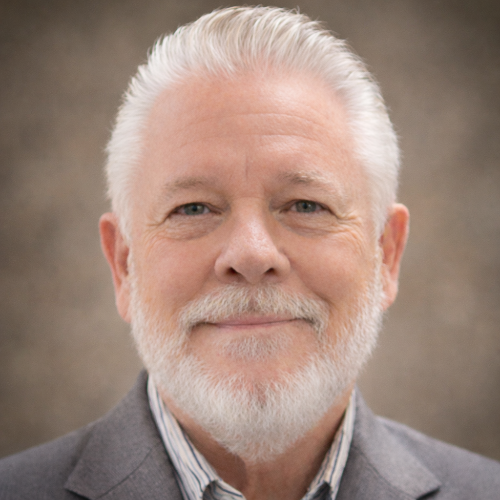
I’ve done a little to-ing and fro-ing in my day.
I traveled around the world five times by the age of eleven. So movement came early for me.
Packing, leaving, arriving, starting over—those weren’t dramatic events; they were normal. Motion felt natural.
Stillness had to be learned later.
So when the Bible talks about people running “to and fro,” I understand that instinctively. I know what it’s like to keep moving—not always because you’re lost, but because stopping feels unfamiliar.
For a long time, running worked.
Running helps you outrun questions.
Running keeps you productive.
Running gives the appearance of progress.
But eventually, for reasons you don’t always choose, the running slows.
Sometimes—if we’re honest—
the get-up goes.
Not because faith has failed.
Not because curiosity has died.
But because motion no longer saves you.
Illustration:
I once saw a large Brahman bull used to mill flour in a village. He was strong, healthy, dependable.
His owners had blinded him, and from morning until night he walked in circles, turning the millstone. The flour was made. The work was done.
Everything looked productive.
Except the bull never went anywhere.
That image stayed with me.
There is a difference between movement and direction.
There is a difference between activity and sight.
There is a difference between running for God and actually knowing God.
Scripture says, “The people who know their God will be strong and take action.”
And it also says, “The eyes of the Lord run to and fro throughout the earth, to strongly support those whose heart is completely His.”
Did you notice the difference?
We run because we’re unsure.
God looks because He knows exactly what He’s seeking.
Sooner or later,
every life reaches a moment when the running stops
—and what remains is not how far we’ve gone, but whether we’ve been seen… and whether we’ve learned to stay.
– Part One: Knowing God in a Time of Pressure
Scripture is honest about what happens when movement no longer carries us—when momentum fails and habit can’t do the work faith once did.
Daniel 11:32 is written into a moment like that.
It’s not a peaceful chapter.
It’s not devotional.
It’s not reflective.
It’s political.
It’s violent.
It’s confusing.
Daniel 11 describes a time when power shifts, truth is manipulated, alliances are made, and religious language is used to disguise betrayal.
In that environment, the text draws a line—not between believers and unbelievers, but within the people who claim the covenant.
Some “act wickedly toward the covenant.”
Others are described this way:
“The people who know their God will be strong and take action.”
That word know is doing far more work than we usually allow it to do.
This is not information.
It is not familiarity.
It is not religious fluency.
This is covenant knowing.
In Scripture, to know God is not to master ideas about Him—it is to belong to Him in a way that holds when pressure is applied.
It’s the kind of knowing that shows up not in calm seasons, but in compromised ones.
That’s why strength comes after knowing—not before it.
Strength in this passage is not energy.
It’s not personality.
It’s not resolve.
It’s stability.
These are people who are no longer being carried by motion, approval, or success. They aren’t running anymore—not because they’re passive, but because they’re anchored.
Only people who are anchored can act without panic.
When life becomes unstable, most of us do one of two things:
we speed up,
or we freeze.
Running is often fear with momentum.
Freezing is fear with exhaustion.
Knowing God creates a third posture: steadfast action.
Not frantic.
Not reactive.
Not desperate.
Just faithful.
That’s why this verse pairs so naturally with 2 Chronicles 16:9:
“The eyes of the Lord run to and fro throughout the earth, that He may strongly support those whose heart is completely His.”
Notice what God is not looking for.
He is not searching for the busiest people.
He is not scanning for the most effective programs.
He is not impressed by constant motion.
He is looking for hearts.
Undivided hearts.
Settled hearts.
Hearts that are His.
Here’s the quiet mercy in that verse:
God is doing the looking.
While we are often unsure—running, circling, trying to keep things moving—God’s gaze is steady. His attention is not anxious. He is not searching because He’s lost. He is searching because He intends to act.
The eyes of the Lord move—not to judge first—but to support.
Which means this:
When the running stops, the most important question is no longer What am I accomplishing?
It becomes What has my heart been attached to all along?
Activity can continue long after sight is gone.
The bull keeps turning the stone.
The flour keeps coming.
But without vision, there is no arrival.
Daniel’s promise is not that those who know God will always move faster.
It’s that they will still be standing when movement fails—and therefore able to act when it actually matters.
– Part Two: What Keeps Us Running
If knowing God creates steadiness, then it’s worth asking the harder question:
What keeps us running in the first place?
Most of us don’t run because we’re rebellious.
We run because something is driving us.
Sometimes it’s fear.
Fear of being irrelevant.
Fear of being left behind.
Fear of being exposed as less than we hoped we were.
Running keeps those fears at bay—for a while. As long as we’re moving, no one asks us to stop and look too closely.
Sometimes it’s approval.
The applause of being needed.
The quiet reassurance that comes from productivity.
The sense that if we stop, something—or someone—might collapse.
So we keep going. Even when the joy thins. Even when the meaning drains out. Even when the motion begins to feel circular.
Sometimes—this is the hardest one—it’s success.
Success is a powerful anesthetic. It dulls the questions that would otherwise wake us up. It convinces us that movement equals faithfulness and that output equals obedience.
Scripture keeps interrupting that assumption.
King Asa is a good example.
In 2 Chronicles 16, Asa is not an evil king. He has a history of reform. He has known moments of real faith. But when pressure comes, he makes a calculated, reasonable, strategic decision—to secure an alliance rather than trust the Lord.
That’s when the prophet speaks the words we’ve been circling:
“The eyes of the Lord run to and fro throughout the earth, that He may strongly support those whose heart is completely His.”
That’s not poetry for private devotion.
That’s a confrontation.
It’s God saying: You didn’t fail because you lacked strength. You failed because your heart wasn’t settled.
Asa didn’t stop believing in God.
He simply stopped depending on Him.
That’s where running becomes dangerous.
Because running can look faithful on the outside while quietly shifting trust on the inside.
The millstone keeps turning.
The work keeps getting done.
The system still functions.
But something essential has gone missing.
Sight.
That’s why God sometimes allows the running to slow.
Not as punishment.
Not as withdrawal.
But as mercy.
When the get-up goes, we’re finally forced to ask questions motion kept us from asking:
Why am I still doing this?
Who am I trying to satisfy?
What would remain if no one were watching?
Those are not questions you ask while sprinting.
They require stillness.
And stillness is terrifying to people who have learned to survive by movement.
Scripture insists on this truth:
God does His deepest work when we stop long enough to be seen.
That’s why knowing God always precedes real strength.
Strength that comes from knowing is not loud.
It doesn’t announce itself.
It doesn’t rush.
It waits.
It listens.
It stays.
Which means that when action finally comes, it’s not reactive—it’s aligned.
Daniel doesn’t say the people who know their God will do more. He says they will be strong and act.
Action that flows from knowing.
Movement that flows from sight.
Faithfulness that doesn’t need speed to validate it.
That brings us to a hard but hopeful truth: God is not offended when your running stops. In fact, sometimes that’s when He’s been waiting for you.
– Part Three: Being Seen When the Running Stops
There is something deeply unsettling about being seen when you are no longer moving.
As long as we’re running, we control the angle. We choose what’s visible. We decide what counts as progress.
When the running stops, we are no longer presenting a version of ourselves—we are simply there.
That’s why the language of God seeing matters so much.
“The eyes of the Lord run to and fro throughout the earth, that He may strongly support those whose heart is completely His.”
This verse is often read as comfort. And it is—but only after it is heard as truth.
God’s eyes are not scanning for performance. They are not evaluating outcomes. They are not impressed by motion.
They are searching for hearts.
Not perfect hearts.
Not tireless hearts.
But undivided ones.
When the running stops, nothing essential has been lost. What has been lost is distraction. And distraction is often the last refuge of divided trust.
When motion falls away, what remains is attachment.
What we lean on.
What we reach for instinctively.
What we believe will hold us when nothing else does.
That’s why this moment—when the get-up is gone—is not a spiritual failure.
It’s a revelation.
It tells us what has actually been carrying us all along.
Some discover that their strength was borrowed from adrenaline.
Some discover it was borrowed from approval.
Some discover it was borrowed from usefulness.
And some—quietly, almost to their surprise—discover that underneath all the running, God has been there the entire time.
Waiting is not passive in Scripture. Waiting is relational.
“Those who wait for the Lord will renew their strength.”
Waiting does not produce strength. God does.
Waiting simply places us where His support can reach us.
That’s why Daniel’s promise holds: “The people who know their God will be strong and take action.”
They are not strong because they never slowed down.
They are strong because they no longer need to outrun their fear.
They can act because they are no longer acting to secure themselves.
They have been seen.
They have been supported.
They have been held.
Once that happens, action becomes possible again—not frantic, not desperate, not circular.
Purposeful.
Directed.
Free.
Sight has returned.
The bull keeps turning the stone because he cannot see.
But a human life is not meant to be lived in circles.
When God opens our eyes, He does not always give us speed back.
Sometimes He gives us direction instead.
And direction is enough.
--- Conclusion: What Remains
Most of us will never finish everything we thought we would.
The plans we carried when we were younger don’t all come true.
The momentum we relied on doesn’t last forever.
The running slows—sometimes by choice, sometimes by force.
When it does, something important is revealed.
What remains is not our résumé.
Not our mileage.
Not how much ground we covered.
What remains -- is what we’ve come to trust.
That’s why Scripture does not say, “The people who accomplish much will be strong.”
It says,
“The people who know their God will be strong and take action.”
Knowing God does not keep us from slowing down. It keeps us from being lost when we do.
The promise we’re given is not that God will always keep us moving—but that He has never stopped seeing.
“The eyes of the Lord run to and fro throughout the earth, that He may strongly support those whose heart is completely His.”
Support doesn’t come because we’re impressive. It comes because we belong.
Somewhere along the way, many of us learned to confuse motion with faithfulness. But faithfulness has never been about speed. It has always been about direction. And direction comes from sight.
When the running stops, God does not withdraw. He does not grow impatient. He does not turn away. If anything, this is often the moment when His presence becomes clearest—because nothing else is carrying us anymore.
It's now not that we can no longer run but we no longer need to -- to be seen by God,
to be known by Him, to be supported by Him—
that is enough.
And it always has been.
--- Appeal
I don’t want to ask you to do anything dramatic.
I don’t want you to promise more effort, more activity, or a faster pace.
I simply want to ask this:
If the running were to stop—
if the noise were to quiet—
if the expectations were to loosen—
Would your heart be free enough to be seen by God?
Not impressive.
Not productive.
Just present.
Scripture says the eyes of the Lord are already moving—
not to measure our output,
but to strongly support those whose heart is His.
So the appeal is this, and nothing more:
Let God have what remains when you stop trying to outrun the questions.
Let Him have the unguarded places.
Let Him have the heart that is tired, honest, and still willing.
You don’t need to start running again.
You don’t need to prove anything.
Just be willing to stay.
--- Prayer
Heavenly Father,
We come before You without hurry.
Some of us are tired from running.
Some of us are confused by the slowing.
Some of us are afraid of what we might find if we stop long enough to be still.
You have promised that Your eyes are already upon us—
not searching for performance,
not demanding results,
but looking to support hearts that belong to You.
So we offer You what remains when the motion ends.
Not our achievements.
Not our plans.
Just ourselves.
Teach us how to know You—not from a distance,
not through constant activity,
but in trust, in stillness, and in truth.
If this is a season of waiting,
let it be a season of deepening.
If this is a season of rest,
let it be a season of being held.
We place our confidence not in how far we’ve gone,
but in the One who has never stopped seeing us.
We ask this in the name of Jesus,
who walked with us, waited with us, and remains with us.
Amen.